
The working principle of industrial grease
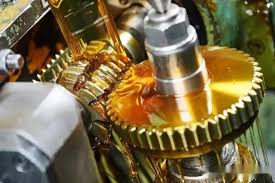
Grease is a thick, oily semisolid, and its main functions are lubrication, protection and sealing. Its working principle is that the thickener keeps the oil in the position where lubrication is needed, and when there is a load, the thickener releases the oil, thereby playing a lubricating role.
At room temperature and in a static state, grease can maintain its shape without flowing, and can adhere to the metal without slipping. When it is sheared by moving parts, it can flow and lubricate, reducing the friction and wear between moving surfaces. When the shearing action stops, it can restore a certain consistency. This special fluidity of grease determines that it can be lubricated in parts that are not suitable for lubricating oil.
A protective film is formed on the surface of the friction pair, which improves the smoothness and strength of the friction pair of the equipment. The protective film has extremely strong, which can greatly reduce the friction resistance of the moving pair surface, enhance the extreme pressure anti-wear performance, reduce wear and power loss and operating temperature, and can also provide protection for the equipment during cold start and short-term oil-free state, improve equipment operation efficiency, and achieve the purpose of energy saving and consumption reduction.
The difference of lithium grease NLGI 1/NLGI 2/NLGI 3
What are the performance indicators of grease?


