
Lubricating grease production process flow
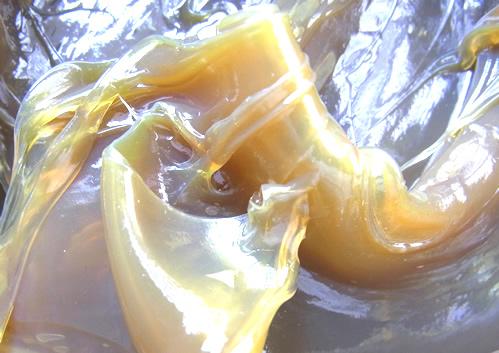
The general production process is as follows: Solvent dewaxing. In order to maintain good fluidity of lubricating oil under low temperature conditions, the wax that is easy to solidify must be removed. This process is called dewaxing. The dew axing process can not only lower the freezing point of lubricating oil but also obtain wax. The so-called waxes are those hydrocarbon compounds that become solid at room temperature of 15°C. The main bodies are n-alkanes and cyclic hydrocarbons with long side chains. N-alkanes above C16 are solid at room temperature. There are many dewaxing methods currently commonly used: cold press dew axing, solvent dewaxing and urea dewaxing. Propane deasphalting is a method that uses propane to extract hydrocarbons from residual oil, that is, liquid propane has a small solubility for asphalt near the critical temperature and a high solubility for oil alkanes, naphthenes, and less aromatic hydrocarbons to make the oil separate from the asphalt. The critical temperature of propane is 96.81°C and the critical pressure is 4.2MPa.
The so-called critical temperature means that when the liquid is heated above this temperature, no matter how much the external pressure increases, it can no longer prevent the liquid from boiling and transforming into steam. The external pressure corresponding to the critical temperature is called the critical pressure. In the area below the critical temperature of propane and close to the critical temperature, the solubility of liquid propane to oil and asphalt decreases with increasing temperature. But the solubility for bitumen decreases very quickly and the solubility for oil decreases very slowly. Therefore the solubility of oil in propane is much greater than the solubility of asphalt at a certain temperature in this temperature range. The deasphalted oil obtained by propane treatment needs to be refined and dewaxed like other distillates.
The quality of the oil after solvent refining and dewaxing after clay refining has basically met the requirements, but it generally contains a small amount of unseparated solvent, water, and certain macromolecular condensates, colloids and impurities produced by heating when recovering the solvent. Stabilizing compounds may also bring out mechanical impurities such as iron filings from processing equipment. In order to remove these impurities and further improve the color of the lubricating oil, improve its stability and reduce carbon residue, additional refining is required. A commonly used supplementary refining method is clay treatment. White clay refining uses the adsorption capacity of activated clay to adsorb various impurities on the activated clay and then filters out the clay to remove all impurities.
The method is to add a small amount of pre-dried activated clay, usually a few percent, to the oil while stirring and heating so that the oil and clay are fully mixed and the impurities are completely adsorbed on the clay, and then filtered with fine filter paper to remove the clay and mechanical impurities. Refined base oil is available. Hydrorefining 1 Hydrogenation supplementary refining: The color, stability and odor of the oil after hydrogenation and supplementary refining are improved, the susceptibility to antioxidants is significantly increased, while the viscosity and viscosity-temperature properties change little, and the non-toxicity in the oil is very high. The content of hydrocarbon elements such as sulfur, nitrogen, and oxygen decreases. The color and stability of oil mainly depend on the small amount of condensed ring compounds and high molecular unsaturated compounds contained in the oil. During hydrogenation, some of the aromatic rings in such compounds become cycloalkanes or ring-opened unsaturated compounds become saturated compounds. This can make the color of the oil lighter and improve its stability. Lubricating oils containing non-hydrocarbon elements such as sulfur, nitrogen, and oxygen will generate corrosive acids during use. When hydrogenated, these elements will react with hydrogen to form hydrogen sulfide, amines, water and other gases that are separated from the oil, thus improving product quality. The product yield of hydrogenation supplementary refining is higher than that of clay refining, and there are no problems such as clay supply and waste clay disposal.
The general production process is as follows: Solvent dewaxing. In order to maintain good fluidity of lubricating oil under low temperature conditions, the wax that is easy to solidify must be removed. This process is called dewaxing. The dew axing process can not only lower the freezing point of lubricating oil but also obtain wax. The so-called waxes are those hydrocarbon compounds that become solid at room temperature of 15°C. The main bodies are n-alkanes and cyclic hydrocarbons with long side chains. N-alkanes above C16 are solid at room temperature. There are many dewaxing methods currently commonly used: cold press dew axing, solvent dewaxing and urea dewaxing. Propane deasphalting is a method that uses propane to extract hydrocarbons from residual oil, that is, liquid propane has a small solubility for asphalt near the critical temperature and a high solubility for oil alkanes, naphthenes, and less aromatic hydrocarbons to make the oil separate from the asphalt. The critical temperature of propane is 96.81°C and the critical pressure is 4.2MPa.
The so-called critical temperature means that when the liquid is heated above this temperature, no matter how much the external pressure increases, it can no longer prevent the liquid from boiling and transforming into steam. The external pressure corresponding to the critical temperature is called the critical pressure. In the area below the critical temperature of propane and close to the critical temperature, the solubility of liquid propane to oil and asphalt decreases with increasing temperature. But the solubility for bitumen decreases very quickly and the solubility for oil decreases very slowly. Therefore the solubility of oil in propane is much greater than the solubility of asphalt at a certain temperature in this temperature range. The deasphalted oil obtained by propane treatment needs to be refined and dewaxed like other distillates.
The quality of the oil after solvent refining and dewaxing after clay refining has basically met the requirements, but it generally contains a small amount of unseparated solvent, water, and certain macromolecular condensates, colloids and impurities produced by heating when recovering the solvent. Stabilizing compounds may also bring out mechanical impurities such as iron filings from processing equipment. In order to remove these impurities and further improve the color of the lubricating oil, improve its stability and reduce carbon residue, additional refining is required. A commonly used supplementary refining method is clay treatment. White clay refining uses the adsorption capacity of activated clay to adsorb various impurities on the activated clay and then filters out the clay to remove all impurities.
The method is to add a small amount of pre-dried activated clay, usually a few percent, to the oil while stirring and heating so that the oil and clay are fully mixed and the impurities are completely adsorbed on the clay, and then filtered with fine filter paper to remove the clay and mechanical impurities. Refined base oil is available. Hydrorefining 1 Hydrogenation supplementary refining: The color, stability and odor of the oil after hydrogenation and supplementary refining are improved, the susceptibility to antioxidants is significantly increased, while the viscosity and viscosity-temperature properties change little, and the non-toxicity in the oil is very high. The content of hydrocarbon elements such as sulfur, nitrogen, and oxygen decreases. The color and stability of oil mainly depend on the small amount of condensed ring compounds and high molecular unsaturated compounds contained in the oil. During hydrogenation, some of the aromatic rings in such compounds become cycloalkanes or ring-opened unsaturated compounds become saturated compounds. This can make the color of the oil lighter and improve its stability. Lubricating oils containing non-hydrocarbon elements such as sulfur, nitrogen, and oxygen will generate corrosive acids during use. When hydrogenated, these elements will react with hydrogen to form hydrogen sulfide, amines, water and other gases that are separated from the oil, thus improving product quality. The product yield of hydrogenation supplementary refining is higher than that of clay refining, and there are no problems such as clay supply and waste clay disposal.
Several misunderstandings about the use of grease
Precautions When Using the Industrial Grease


