
How to determine whether the grease has failed?
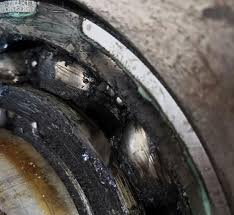
The following aspects can be used to determine whether the grease has failed:
Appearance changes
Observe the color, texture and consistency of the grease. If the color becomes darker, oil separation occurs, or the grease becomes hard and lumpy, it may mean that the grease has deteriorated and failed.
Impurity content
Check whether there are too many impurities, particles or foreign matter in the grease. The increase of impurities may affect the lubrication effect.
Decreased lubrication performance
After the equipment uses the grease, the friction increases, the temperature rises, the noise becomes louder, or abnormal wear occurs. This may be a manifestation of insufficient lubrication performance caused by the failure of the grease.
Changes in viscosity
If the viscosity of the grease becomes thinner or thicker, beyond the normal range, it means that its performance may have changed.
Changes in chemical properties
Through chemical analysis, the acid value, alkalinity value and other indicators of the grease are tested. If these indicators deviate greatly from the normal range, it may mean that the grease has failed.
Poor sealing effect
If the grease cannot be effectively sealed, it is easy for external impurities to enter or the lubricating medium to leak, which may be a sign of grease failure.
Service life
If the specified service life is exceeded, even if there is no obvious sign of failure, the grease should be replaced.
Combining the above observations and tests, it is possible to accurately determine whether the grease has failed, so that it can be replaced in time to ensure the normal operation and service life of the equipment.
What types of lubricants are there?
How can grease maintain lubrication for a long time?


