
Can lubricants be used after they have exceeded their shelf life?
author: Leila
2024-07-17
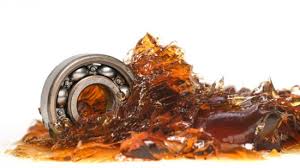
Q: The storage time of lubricants has exceeded their shelf life. Can they still be used? Is there any way to detect whether lubricants can still be used?
A: Strictly speaking, it is not recommended to use lubricants that have exceeded their shelf life. However, if there is a large amount of oil and you are worried about wasting it by discarding it, you can examine the oil quality from the following aspects.
The first is to conduct a preliminary inspection. Under normal circumstances, lubricants should be clear, translucent or transparent liquids. If lubricants are oxidized, the color will change. In addition, if the transparency of lubricants decreases, it means that the quality of the lubricants has changed. If lubricants smell sour or smelly, they have deteriorated. In addition, if the viscosity of the oil can be observed to change significantly (thinning, thickening), and the properties are uneven, it is not suitable for use.
If the lubricant is in good condition in appearance, the following points can help us further determine the quality of the lubricant.
A: Strictly speaking, it is not recommended to use lubricants that have exceeded their shelf life. However, if there is a large amount of oil and you are worried about wasting it by discarding it, you can examine the oil quality from the following aspects.
The first is to conduct a preliminary inspection. Under normal circumstances, lubricants should be clear, translucent or transparent liquids. If lubricants are oxidized, the color will change. In addition, if the transparency of lubricants decreases, it means that the quality of the lubricants has changed. If lubricants smell sour or smelly, they have deteriorated. In addition, if the viscosity of the oil can be observed to change significantly (thinning, thickening), and the properties are uneven, it is not suitable for use.
If the lubricant is in good condition in appearance, the following points can help us further determine the quality of the lubricant.
1. Types of lubricants: After long-term storage, lubricants with more complex additive components are more likely to have problems. For example, if the lubricant (engine oil) of an automobile engine is used in large quantities, then after long-term storage, the possibility of the additive changing in properties and separating is relatively high. If the additive composition of the lubricant is relatively simple, such as anti-oxidation and anti-rust lubricant, the risk of the additive separating after long-term storage is relatively small.
2. Storage conditions of lubricants: The main causes of lubricant deterioration are: air oxidation, high temperature, oil contamination (any substance other than lubricants is an impurity, including dust, moisture, etc.), and sunlight. If these conditions occur during the storage of lubricants, the deterioration rate of the oil quality will be significantly accelerated.
If the lubricant is sealed and stored in a cool and dry place indoors, and relevant measures are taken (such as installing a breathing cap and good sealing) to isolate air, dust, moisture, etc., then the oil quality will be relatively stable and not prone to deterioration. When in contact with air, the lubricant will oxidize, and certain factors will accelerate the oxidation process, causing the lubricant to "age prematurely". During storage, the oxidation rate doubles for every 10 degrees Celsius increase in temperature (that is, the shelf life of the lubricant is halved). In addition, if it is stored outdoors, due to the large temperature difference, it is easy to absorb moisture due to thermal expansion and contraction, and water will cause the lubricant to deteriorate. Outdoors are prone to sun and rain, and the ultraviolet rays of the sun will accelerate the oxidation and deterioration of the lubricant, and rain entering the oil will also cause the oil quality to deteriorate.
The storage container of the lubricant also affects the oxidation rate of the lubricant. For example, the contact between the iron container and the oil will accelerate the oxidation of the lubricant. Relatively speaking, if it is a plastic lining, this problem can be avoided.
3. How long does the lubricant exceed the shelf life: How long is the storage time of the lubricant? One or two months beyond the shelf life is definitely different from one or two years beyond the shelf life. Secondly, where is the lubricant used? Is the machine that uses the oil important? If a failure occurs, will it cause a large loss?
The above method is only a qualitative assessment of the oil quality of the lubricant after storage. If the amount of lubricant is large and you don’t want to waste it, it is best to do an oil test (oil analysis) before using the lubricant that has exceeded the shelf life. Oil testing can quantitatively and accurately determine the oil quality of the lubricant through professional testing equipment.
Generally speaking, the storage time of industrial lubricants is recommended to be within 1 year, and that of grease within half a year. In order to ensure good equipment lubrication, lubricants should be stored in accordance with the "first in, first out" principle to avoid long-term storage of lubricants.
2. Storage conditions of lubricants: The main causes of lubricant deterioration are: air oxidation, high temperature, oil contamination (any substance other than lubricants is an impurity, including dust, moisture, etc.), and sunlight. If these conditions occur during the storage of lubricants, the deterioration rate of the oil quality will be significantly accelerated.
If the lubricant is sealed and stored in a cool and dry place indoors, and relevant measures are taken (such as installing a breathing cap and good sealing) to isolate air, dust, moisture, etc., then the oil quality will be relatively stable and not prone to deterioration. When in contact with air, the lubricant will oxidize, and certain factors will accelerate the oxidation process, causing the lubricant to "age prematurely". During storage, the oxidation rate doubles for every 10 degrees Celsius increase in temperature (that is, the shelf life of the lubricant is halved). In addition, if it is stored outdoors, due to the large temperature difference, it is easy to absorb moisture due to thermal expansion and contraction, and water will cause the lubricant to deteriorate. Outdoors are prone to sun and rain, and the ultraviolet rays of the sun will accelerate the oxidation and deterioration of the lubricant, and rain entering the oil will also cause the oil quality to deteriorate.
The storage container of the lubricant also affects the oxidation rate of the lubricant. For example, the contact between the iron container and the oil will accelerate the oxidation of the lubricant. Relatively speaking, if it is a plastic lining, this problem can be avoided.
3. How long does the lubricant exceed the shelf life: How long is the storage time of the lubricant? One or two months beyond the shelf life is definitely different from one or two years beyond the shelf life. Secondly, where is the lubricant used? Is the machine that uses the oil important? If a failure occurs, will it cause a large loss?
The above method is only a qualitative assessment of the oil quality of the lubricant after storage. If the amount of lubricant is large and you don’t want to waste it, it is best to do an oil test (oil analysis) before using the lubricant that has exceeded the shelf life. Oil testing can quantitatively and accurately determine the oil quality of the lubricant through professional testing equipment.
Generally speaking, the storage time of industrial lubricants is recommended to be within 1 year, and that of grease within half a year. In order to ensure good equipment lubrication, lubricants should be stored in accordance with the "first in, first out" principle to avoid long-term storage of lubricants.
What indicators are used to measure the high temperature performance of grease?
Exploring the World of Grease


