
How to reduce the cost of equipment lubrication?
author: Leila
2024-08-07
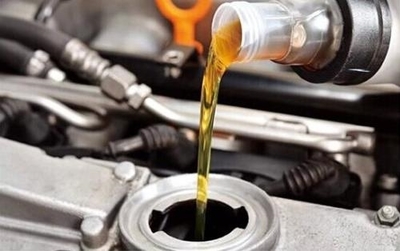
In equipment maintenance management, in order to reduce overall expenditures, the purchase cost of lubricants is often suppressed. It is normal to pursue good quality and low price, but it is not advisable to only pick up cheap goods. If you only focus on the price when buying oil, you often lose a lot because lubricants are the "blood" of the equipment. Poor quality oil will plant the seeds of illness for the equipment, cause machine failures, bring maintenance expenses, and shorten the life of the equipment, causing you to lose the money invested in the equipment. So, how to rationally reduce the purchase cost of lubricants? This includes five aspects.
1. Scientific oil selection:
Choosing a suitable lubricant cannot be just cheap, nor does it mean that expensive oil is definitely the best. There will be technical parameters on the outer packaging of the lubricant. First, you must choose the right brand (viscosity of lubricant, consistency of grease and viscosity of base oil), and then check the formula and product characteristics.
Choosing a suitable lubricant cannot be just cheap, nor does it mean that expensive oil is definitely the best. There will be technical parameters on the outer packaging of the lubricant. First, you must choose the right brand (viscosity of lubricant, consistency of grease and viscosity of base oil), and then check the formula and product characteristics.
The lubricant packaging will have a description of the product's performance. Determine the required performance based on your operating conditions. For example, in an environment with high humidity, the lubricant should have good anti-emulsification and oil-water separation properties, while grease needs a lower water washout loss rate and better adhesion; if the temperature is high, the lubricant should have good high-temperature oxidation stability, etc. These properties should be tested and certified by authoritative organizations, such as ASTM, DIN, ISO, etc., which are more common certifications. High-quality lubricants also have certifications for equipment brands in the industry, such as Siemens, Alstom, GE, etc.
Choose long-lasting lubricants under the premise of being suitable. These oils have a longer service life and a longer oil change interval. This type of oil has better oxidation stability, which can reduce the risk of oil quality deterioration during use. Although the price of long-lasting lubricants is generally high, the oil consumption is low due to the small number of oil changes, and the trouble of oil changes is also reduced. No matter what kind of lubricant is used, first of all, it is necessary to ensure that the lubricant and the lubrication system are clean, closed, dustproof and waterproof. If there are frequent leaks during use or the oil is often contaminated, it must be changed frequently, then the long-lasting oil will not have an advantage in terms of economy.
Reduce the brands of lubricants on the basis of suitability. The brands of lubricants should be streamlined and unified during purchase, which is more conducive to evaluating the service and oil performance of suppliers, reducing the risk of misuse of oil products, reducing the possibility of cross-contamination between lubricants, and more conducive to inventory management.
2. Extend the service life of lubricants:
During normal use, lubricants will gradually oxidize, resulting in the deterioration of oil quality. After the oil deteriorates, it is not suitable for use, so the oil needs to be changed. The service life of lubricants is determined by two factors: the quality grade of the lubricant itself and the use environment that the lubricant is exposed to. The following situations are common reasons for the "short life" of
During normal use, lubricants will gradually oxidize, resulting in the deterioration of oil quality. After the oil deteriorates, it is not suitable for use, so the oil needs to be changed. The service life of lubricants is determined by two factors: the quality grade of the lubricant itself and the use environment that the lubricant is exposed to. The following situations are common reasons for the "short life" of
lubricants:
l High oil temperature: After exceeding 60℃, the service life of the lubricant is halved for every 10℃ increase. Therefore, pay attention to controlling the oil temperature and use cooling equipment when necessary.
l Oil contamination: In addition to high temperature, oil contamination will also oxidize. In addition to the same type of lubricant in use, other lubricants, fuels, other impurities, moisture, and excessive bubbles are considered pollutants - keep the lubricant clean, water-free, cool, and avoid sunlight and ultraviolet rays. Pollution control should be based on prevention, keep the seal and filter element effective, and secondly use fine filtering equipment or oil purification equipment.
l Incomplete lubricant replacement: Some people do not drain the old oil when changing the oil, resulting in the new oil and the oxidized and deteriorated old oil or even sludge mixed together. The old oil has been oxidized, and some still contain a large number of microorganisms. Bringing in new oil will cause the new oil to be short-lived. When changing the oil, in addition to draining the old oil as much as possible, it should also be rinsed with new oil to reduce the amount of old oil residue.
Lubricating oil deterioration may also be caused by the exhaustion of additives. For large lubrication systems, a large amount of lubricating oil is used. If the additives are exhausted, they can be partially replaced with new oil or appropriately supplemented with additives. This practice must be completed under the guidance of professional oil suppliers or specialized oil testing laboratories. The type of additives to be used and the amount to be used are determined by testing and analyzing the oil quality components.
3. Optimize the oil change time:
Grasp the appropriate time to change the oil-changing too frequently will cause oil waste. If the oil is not changed in time, it will cause damage to the machine, and even cause downtime, accidents, and affect production. The best way is to determine whether the oil should be changed through oil testing. Some users change the oil on time according to the fixed oil change cycle, but ignore their actual working conditions, and some users rely on their feelings. Since there are many types of lubricants in use and the working conditions of the equipment may also be different, the optimal oil change period can be found through oil testing. For example, when the oil change period recommended by the manufacturer is approaching, an oil test is performed. If it is found that the oil still has a few months of service life left, it means that the recommended oil change period can be extended as appropriate. If the oil has already deteriorated, the oil change period should be shortened.
Grasp the appropriate time to change the oil-changing too frequently will cause oil waste. If the oil is not changed in time, it will cause damage to the machine, and even cause downtime, accidents, and affect production. The best way is to determine whether the oil should be changed through oil testing. Some users change the oil on time according to the fixed oil change cycle, but ignore their actual working conditions, and some users rely on their feelings. Since there are many types of lubricants in use and the working conditions of the equipment may also be different, the optimal oil change period can be found through oil testing. For example, when the oil change period recommended by the manufacturer is approaching, an oil test is performed. If it is found that the oil still has a few months of service life left, it means that the recommended oil change period can be extended as appropriate. If the oil has already deteriorated, the oil change period should be shortened.
For lubricating oil systems with smaller usage (non-circulating systems below 200 liters), the oil can be changed regularly according to the time recommended by the equipment manufacturer and combined with the actual use conditions. If the use environment is dirty or the temperature is high, the oil change cycle recommended by the equipment manufacturer needs to be shortened. For lubricating systems with more than 200 liters, the oil change time should be determined through oil testing, that is, "oil change according to quality". Keeping good oil change records at ordinary times can also help us master the oil change cycle.
4. Reduce waste during oil use:
Small packages of oil help reduce waste. If the packaging container is large, it is easy to waste if it cannot be used up at one time. On the other hand, oil will gradually oxidize during storage, especially after opening. If the remaining oil is left for too long, the performance will be reduced. If the storage conditions are not paid attention to during storage, the oil may be contaminated during storage, affecting the use or even unusable. Therefore, the remaining lubricating oil should be reduced, and the "first in, first out" principle should be followed to keep the freshness of the stock lubricating oil and avoid the backlog of deteriorated lubricating oil.
Small packages of oil help reduce waste. If the packaging container is large, it is easy to waste if it cannot be used up at one time. On the other hand, oil will gradually oxidize during storage, especially after opening. If the remaining oil is left for too long, the performance will be reduced. If the storage conditions are not paid attention to during storage, the oil may be contaminated during storage, affecting the use or even unusable. Therefore, the remaining lubricating oil should be reduced, and the "first in, first out" principle should be followed to keep the freshness of the stock lubricating oil and avoid the backlog of deteriorated lubricating oil.
Oil cans and other tools used when refueling are also prone to invisible waste. Sometimes a pot cannot be used up, and some oil is left in the container, which is left there, and new oil is added next time. During storage, if the quality of the remaining oil has deteriorated, it will affect the service life of the new oil when mixed with the new oil. In addition, if these oil cans are not marked, it is very easy to cause different oils to share a container, or simply cause different lubricating oils to mix, causing problems with the new oil. Containers and packaging that come into contact with lubricating oil must be separated and marked for each oil.
5. Prevent oil leakage:
Leakage not only causes waste of lubricating oil, but also causes machine failure. Leakage may cause insufficient oil and poor lubrication, which may cause equipment wear. In addition, impurities may enter the machine through the leakage point, causing equipment wear and failure. Leakage problems must be discovered and solved early.
Leakage not only causes waste of lubricating oil, but also causes machine failure. Leakage may cause insufficient oil and poor lubrication, which may cause equipment wear. In addition, impurities may enter the machine through the leakage point, causing equipment wear and failure. Leakage problems must be discovered and solved early.
What is the lubricant number 5W-30?
Which environmentally friendly marine lubricant is the best?


