
Basic knowledge of industrial lubricants
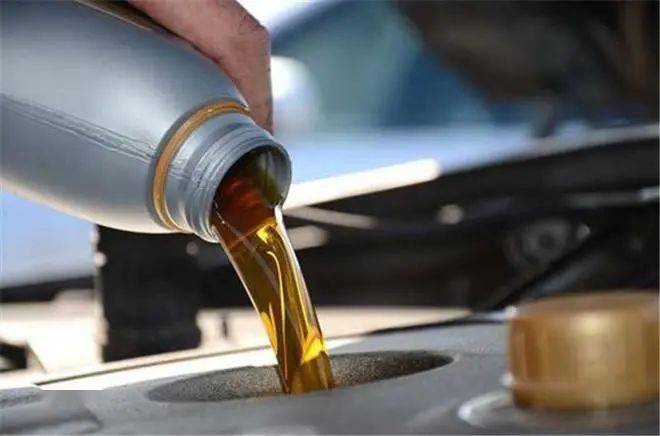
The industrial application fields mainly include hydraulic oil, gear oil, turbine oil, compressor oil, refrigeration oil, transformer oil, vacuum pump oil, bearing oil, metal processing oil (liquid), rust proof grease, cylinder oil, heat treatment oil, and heat transfer oil. In addition, there is lubricating grease with lubricating oil as the base oil and thickening agent added. The users of industrial lubricants are enterprises from various industries, generally using a wide variety and large quantity, which not only depends on the price of the product, but also on the quality and technical characteristics of the product, as well as the quality of technical services. Therefore, the technical marketing of industrial lubricants is more important. Industrial lubricants have different additives in different application scenarios. Hydraulic oil used outdoors should have suitable temperature changes for the local area, so hydraulic oil used indoors in a sealed environment should not be used. In addition, heavy-duty gear oil and molding oil have different usage conditions. Heavy duty gear oil contains extreme pressure additives to ensure that it can be used in harsh environments, while molding oil is usually pure mineral oil without additives. Enterprises that use industrial lubricants have relatively concentrated machinery and equipment, so purposeful and targeted technical exchanges will be more necessary. This is also the main form of pre-sales technical services.
The basic performance and main selection principle of industrial lubricating oil is viscosity. Generally speaking, medium viscosity lubricating oil is selected under working conditions of medium speed, medium load, and low temperature; Under high load, low speed, and high temperature conditions, choose high viscosity lubricating oil or lubricating oil with added extreme pressure anti-wear agents; Select low viscosity lubricating oil under low load, high speed, and low temperature conditions; Choose synthetic lubricating oil in a wide range of high and low temperatures, light loads, high speeds, and other special requirements.
The basic performance and main selection principle of lubricating grease is cone penetration, which is used to classify the viscosity level of lubricating grease. Therefore, it should also be introduced to users. Cone penetration is a commonly used indicator for controlling the working viscosity of various lubricating greases, used to indicate the performance of lubricating grease entering the friction point and the degree of softness and hardness of lubricating grease. Generally speaking, when bearings using lubricating grease are subjected to high loads and low speeds, lubricating grease with low cone penetration should be selected. On the contrary, when the load is small and the speed is high, lubricating grease with high cone penetration should be selected. Synthetic lubricating grease should be used in a wide range of high and low temperatures, light loads, high speeds, and very low temperatures, as well as when there are other special requirements.
There are many types and varieties of industrial lubricants, each with its own characteristics in terms of technical performance and a wide range of technologies involved. Hydraulic oil is the most commonly used large variety in industrial lubricants, and this variety is briefly explained as an example.
In hydraulic transmission systems, hydraulic oil, as an energy transfer medium, can transmit power, reduce friction, block worn surfaces, suspend pollutants, control component oxidation, and has a cooling effect. Various hydraulic systems have different types of structures and usage conditions. In order to meet the requirements of various systems, hydraulic oil must have certain properties, such as viscosity, viscosity index, relative density, wear resistance, low temperature, acid value, flash point, oxidation stability, demulsification, hydrolysis stability, foaming, air release, shear safety, rust prevention, and filtration. HL hydraulic oil is made from refined neutral base oil with added anti-oxidation and anti rust additives. It is used in general machine tool hydraulic equipment to reduce component wear, lower temperature rise, and prevent rust.
HM hydraulic oil is made by adding antioxidants, rust inhibitors, and anti-wear agents to neutral base oil with a viscosity index greater than 95 and a refined depth. Therefore, it has good anti-wear properties and can be used in high-speed and high-pressure hydraulic systems.
HG hydraulic oil is made by adding anti slip additives (oil agents or friction reducers) on the basis of HM hydraulic oil. In addition to good anti-oxidation, anti rust, and anti-wear properties, it also has excellent anti slip properties. It is used in machine tools that are compatible with hydraulic systems and guide rail lubrication systems to minimize the vibration and intermittent sliding (stick slip) of the guide rail at low speeds. However, it is not suitable for high-pressure hydraulic systems. HV hydraulic oil is made of base oil with a viscosity index greater than 130, added with anti-oxidation, anti rust, anti-wear, viscosity index improver and pour point depressant, and can be used for hydraulic equipment working in cold regions and harsh environments.
There are many types of industrial lubricants, and it is necessary to choose the appropriate oil according to the different operating conditions of the equipment.
What are the application areas of grease?
Knowledge of using lubricating oil filling machine


