
Meaning of engine oil index
author: Ann
2024-08-12
Engine lubricant:
I. Meaning of oil index.
The market brand motor oil manual will often appear on the "SAE" and "API", "SAE" is used to assess the viscosity of the oil, followed by a number from 5 to 50, the larger the number, the thicker the oil, and vice versa, the thinner the oil. The larger the number, the thicker the oil is and the thinner it is. API" is used to assess the grade of oil, with "S" for gasoline (Q for gasoline in China), "C" for diesel, followed by "S" for gasoline, and "C" for diesel, followed by "C" for diesel. S" for gasoline ("Q" for gasoline in China), "C" for diesel fuel, followed by the letters of the alphabet to indicate the level of oil, "A" is the lowest level, "M" is the highest level, commonly used "C", D" and "F", etc. For example, "API CD" means "D" for diesel engines in the "API" standard. For example, "API CD" means "D" grade oil for diesel engines in the "API" standard.
Viscosity is one of the most important characteristics of engine oils, and the correlation between the viscosity index and the engine operating temperature plays an important role in the lubricating function of the oil. Generally speaking, the characteristics of "oil" are thickening at low temperatures and thinning at high temperatures, which is contrary to the actual working requirements of the engine, and additives can be utilized to change the nature of the oil. The Society of Automotive Engineers (SAE) has also established SAEJ300 as the standard for defining the oil viscosity system, and the SAE viscosity grade enables engine manufacturers and oil suppliers to use a uniform specification for oil marking, and consumers also use this as a criterion for selecting the viscosity of the oil.
Automobile engine systems require oil lubrication as long as they run and start, regardless of low or high temperatures. The oil should have high fluidity (low viscosity) when the engine is cold and starting at low temperatures in order to quickly supply all engine parts with the lubrication they need, minimizing the time the oil is not sufficiently lubricated before the first cycle is completed and minimizing engine wear. As the engine temperature rises, the viscosity of the oil must not become thinner and the strength of the oil film must not deteriorate in order to provide complete lubrication.
I. Meaning of oil index.
The market brand motor oil manual will often appear on the "SAE" and "API", "SAE" is used to assess the viscosity of the oil, followed by a number from 5 to 50, the larger the number, the thicker the oil, and vice versa, the thinner the oil. The larger the number, the thicker the oil is and the thinner it is. API" is used to assess the grade of oil, with "S" for gasoline (Q for gasoline in China), "C" for diesel, followed by "S" for gasoline, and "C" for diesel, followed by "C" for diesel. S" for gasoline ("Q" for gasoline in China), "C" for diesel fuel, followed by the letters of the alphabet to indicate the level of oil, "A" is the lowest level, "M" is the highest level, commonly used "C", D" and "F", etc. For example, "API CD" means "D" for diesel engines in the "API" standard. For example, "API CD" means "D" grade oil for diesel engines in the "API" standard.
Viscosity is one of the most important characteristics of engine oils, and the correlation between the viscosity index and the engine operating temperature plays an important role in the lubricating function of the oil. Generally speaking, the characteristics of "oil" are thickening at low temperatures and thinning at high temperatures, which is contrary to the actual working requirements of the engine, and additives can be utilized to change the nature of the oil. The Society of Automotive Engineers (SAE) has also established SAEJ300 as the standard for defining the oil viscosity system, and the SAE viscosity grade enables engine manufacturers and oil suppliers to use a uniform specification for oil marking, and consumers also use this as a criterion for selecting the viscosity of the oil.
Automobile engine systems require oil lubrication as long as they run and start, regardless of low or high temperatures. The oil should have high fluidity (low viscosity) when the engine is cold and starting at low temperatures in order to quickly supply all engine parts with the lubrication they need, minimizing the time the oil is not sufficiently lubricated before the first cycle is completed and minimizing engine wear. As the engine temperature rises, the viscosity of the oil must not become thinner and the strength of the oil film must not deteriorate in order to provide complete lubrication.
er. how to choose motor oil for your car?
There are two steps in the selection of motor oil: one is the selection of the use grade and the other is the selection of the viscosity grade.
The difference between the use level of motor oil can be seen from the above table, the difference lies in the second letter, the more backward the order, the higher the level. The main consideration for the selection of the use grade is the engine model. Different engine models have different effective cylinder pressures and engine speeds depending on the engine's lift power and average piston speed. The higher the effective cylinder pressure, the higher the engine speed, and the higher the requirements for the use level of engine oil. Generally speaking, newer engine models require higher oil levels.
In the selection of engine oil, in strict accordance with the automobile instruction manual for the use of oil level selection, if there is no same level of oil, you can use a higher level of oil, but never use a lower level instead.
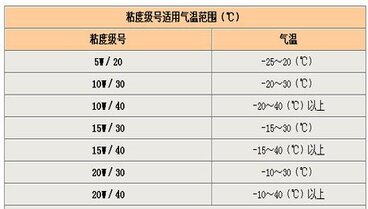
The main basis for selecting the viscosity level of motor oil is the ambient temperature. Generally speaking, in April to September in most areas of the country can be used 20 ~ 40 number of all levels of summer motor oil.
Winter oil selection should be noted, in China south of the Yangtze River, north of the South Ridge, the lowest temperature in winter can reach -10 ° C - 0 ° C, the available 25W level; in the Yellow River, south of the Yangtze River, the lowest temperature in winter can reach -5 ° C ~ -15 ° C, the available 20W level; in North China, central and western, and the Yellow River north of the region, the lowest temperature in winter can reach -15 ° C ~ -25 ° C, the available 15W or -25 ° C, the available 15W or -25 ° C, the available 20W level. -25℃, available 15W or 10W level; and in the northeast, northwest and other cold areas, the minimum winter temperature can reach -25℃~-30℃, to use 5W level; for other alpine areas, the minimum winter temperature can be -30℃ or less, it is necessary to use 0W level.
There are two steps in the selection of motor oil: one is the selection of the use grade and the other is the selection of the viscosity grade.
The difference between the use level of motor oil can be seen from the above table, the difference lies in the second letter, the more backward the order, the higher the level. The main consideration for the selection of the use grade is the engine model. Different engine models have different effective cylinder pressures and engine speeds depending on the engine's lift power and average piston speed. The higher the effective cylinder pressure, the higher the engine speed, and the higher the requirements for the use level of engine oil. Generally speaking, newer engine models require higher oil levels.
In the selection of engine oil, in strict accordance with the automobile instruction manual for the use of oil level selection, if there is no same level of oil, you can use a higher level of oil, but never use a lower level instead.
The main basis for selecting the viscosity level of motor oil is the ambient temperature. Generally speaking, in April to September in most areas of the country can be used 20 ~ 40 number of all levels of summer motor oil.
Winter oil selection should be noted, in China south of the Yangtze River, north of the South Ridge, the lowest temperature in winter can reach -10 ° C - 0 ° C, the available 25W level; in the Yellow River, south of the Yangtze River, the lowest temperature in winter can reach -5 ° C ~ -15 ° C, the available 20W level; in North China, central and western, and the Yellow River north of the region, the lowest temperature in winter can reach -15 ° C ~ -25 ° C, the available 15W or -25 ° C, the available 15W or -25 ° C, the available 20W level. -25℃, available 15W or 10W level; and in the northeast, northwest and other cold areas, the minimum winter temperature can reach -25℃~-30℃, to use 5W level; for other alpine areas, the minimum winter temperature can be -30℃ or less, it is necessary to use 0W level.
Selection of Lubricating Oil and Equipment Lubrication Management in Steel Plants
What factors affect the life of grease?


