
Machine maintenance: 5 rules for equipment lubrication (V) - How to master the oil change time of equipment?
author: Leila
2024-10-11
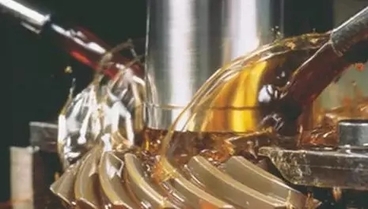
Whether it is a car or a machine, it is 70% maintenance and 30% repair. Maintenance instead of repair is the key to saving maintenance costs and extending the service life of equipment, and equipment lubrication is a key link in maintenance.
First, let's briefly review the classification of lubricants: Lubricants are divided into two major categories: automotive oil and industrial oil. Engine oil (commonly known as engine oil) used in automobile engines, gear oil used for gear lubrication, compressor oil used in compressors, turbine oil, refrigeration oil, hydraulic oil, etc., although the performance and function are different, they are all lubricants. In addition, grease (commonly known as butter) is widely used in bearings, open gears, etc. Lubricants are divided into grades according to viscosity (viscosity), and greases are divided into grades according to consistency (also known as cone penetration, needle penetration).
Formulating a scientific lubrication plan should include five aspects, which we can understand as the 5R principle of equipment lubrication:
Right Type Choose the right lubricant
Right Quality Qualified quality
Right Amount Appropriate amount
Right Place Use it in the right place
Right Time Master the correct oil change time
Right Quality Qualified quality
Right Amount Appropriate amount
Right Place Use it in the right place
Right Time Master the correct oil change time
In the previous issues, we have discussed four points: how to choose the right lubricant and grease; how to select and test the quality of lubricants and greases; the amount of lubricants and greases; and how to prevent the use of wrong oils. In this issue, OLM will continue to discuss the last point with you, the fifth R: master the correct oil change time.
Grease:
The greasing cycle of the bearing under normal speed, load and temperature can be estimated according to the following formula:
tf = greasing cycle, hours
d = bearing inner diameter, mm
n = speed, rpm
K = coefficient, the coefficient here only takes into account the bearing type
K = 1 tapered roller bearing
K = 5 roller bearing
K = 10 ball bearing
Note: The coefficient K in this formula only takes into account the bearing type factor, that is, if the use conditions are ideal, the environment is clean, the temperature is not high, and there is no contact with water and other pollutants, then the grease change cycle can be calculated from the above formula.
In the following situations, shorten the oil change cycle as appropriate: high humidity, high temperature, heavy load, dirty environment, vibration around, contact with corrosive substances, etc., please contact the oil supplier.
Lubricating oil:
For systems lubricated with lubricating oil, the oil change time is related to the size of the oil tank and the type of lubrication system. Based on the suggestions of the OEM (equipment manufacturer) and the actual use conditions, grasp the appropriate time for oil change. For non-circulating systems below 50 gallons and about 190 liters (such as gearboxes with splash lubrication and oil bath lubrication), oil can be changed regularly according to the time recommended by the equipment manufacturer and the actual use conditions. For example, when factory A uses this type of pump with the same specifications of ANSI small centrifugal pump, the oil change cycle is once a quarter, while factory B changes it every two years. The reason for this difference is the use environment.
OEM will recommend oil change cycles to users, but certain environmental factors require us to shorten the oil change cycle. The reason for the deterioration of lubricating oil is oxidation. When it comes into contact with moisture, high temperature, and pollutants, the oxidation rate of lubricating oil accelerates. Due to water ingress and contact with impurities, factory A needs to change oil once a quarter. In addition to empirical judgment, oil testing can give an accurate oil change time.
For lubricating systems above 50 gallons (about 190 liters), the oil change time should be determined by oil testing. In daily maintenance, it is also important to visually check the state of the oil. The darkening and blackening of the oil often indicates that the oil has been oxidized; while turbid oil and suspended matter indicate that there are pollutants.
The main reason for lubricant deterioration is oxidation, and the oxidation rate is directly related to temperature. Above 60°C, the life of the oil is halved for every 18°F (10°C) increase in temperature. In actual use, if the oil temperature is higher than the OEM's recommendation, the oil change cycle should be adjusted accordingly. Lubricant oxidation will produce sludge, varnish, and acidic substances, which are harmful to equipment and in turn accelerate oil deterioration. Lubricant oxidation can be monitored by detecting the acid value (AN) in the lubricant. Lubricant contamination can also cause oil deterioration. The cleanliness of the lubricant can be monitored by detecting water and particulate contaminants in the oil.
Summary: The oil change cycle of lubricating oil and grease follows the following rules:
For lubricating systems with smaller capacity (less than 50 gallons), regular oil changes can be made according to the OEM's recommendations, combined with actual use conditions and temperature. In addition, oil testing helps to develop an accurate oil change cycle, and it is recommended to develop an oil change plan through oil testing.
In daily maintenance, visually check the color and transparency of the lubricating oil, and pay attention to oxidation products such as sludge and varnish.
For larger lubrication systems (over 50 gallons), the oil change time should be determined based on oil testing.
Using synthetic oil can help extend the oil change time. If the operating temperature is high (over 80°C), you should consider using synthetic oil.
Don't be reluctant to change the oil. Lubricating oil is very critical to the machine. If it deteriorates and is not changed, it will cause equipment damage, shorten equipment life, and cause failure downtime.
Some Greases Suitable for Small Bearings
What to do if high-viscosity gear oil is difficult to filter?


