
Ways to Determine Whether Grease Needs to be Replaced
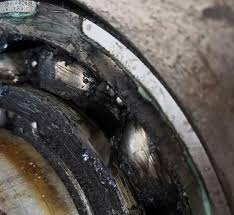
I. Appearance inspection
1. Color change: Normal grease is generally more uniform in color. If the color of the grease becomes obviously black, it may be due to oxidation, contamination or impurities mixed in. At this time, you need to consider replacing it.
2. Change in viscosity: Observe whether the grease becomes thinner or harder. Thinning may be due to high temperature, mixing with low-viscosity substances, etc.; hardening may be due to oxidation, water evaporation or base oil loss. If the viscosity changes significantly, it will affect the lubrication effect and you should consider replacing it.
II. Touch judgment
1. Take a small amount of grease and rub it between your fingers. If it feels granular, rough or no longer smooth, it means that impurities may be mixed in the grease, and the lubrication performance has decreased, so it needs to be replaced.
2. Feel the viscosity of the grease. If the viscosity is significantly reduced, it may be due to base oil loss or grease aging, and it cannot effectively adhere to the friction surface. At this time, you should also consider replacing it.
III. Equipment operation status
1. Abnormal temperature: If the temperature of key parts of the equipment increases significantly during operation, it may be due to grease failure, resulting in increased friction. You can use tools such as a temperature gun to monitor the temperature. If the temperature continues to be higher than the normal range, you should check the grease status and replace it if necessary.
2. Increased noise and vibration: Good lubrication can reduce the noise and vibration of the equipment. If abnormal noise and vibration increase during the operation of the equipment, it may be that the performance of the grease has declined and cannot effectively reduce friction and wear. At this time, you need to check the grease to determine whether it needs to be replaced.
IV. Use time and experience judgment
1. According to the equipment manufacturer's recommendations and previous use experience, determine the approximate grease replacement time interval. If it is close to or exceeds this time, even if there is no obvious abnormality, you can consider replacing the grease to ensure the reliable operation of the equipment.
2. For some key equipment or important parts, you can regularly sample and test the performance indicators of the grease, such as viscosity, oxidation stability, anti-wear performance, etc., and decide whether to replace the grease based on the test results.
Влияет ли цвет смазки на производительность?
Principles of lubricant selection according to the working conditions of machinery


