
Lubricating oil viscosity classification and index comparison table
author: Ann
2024-11-11
| Grade | Working cone penetration* (after 60 operations at 25°C) |
| NLGI #000 NLGI #00 NLGI #0 NLGI #1 NLGI #2 NLGI #3 NLGI #4 NLGI #5 NLGI #6 |
444~475 400~430 355~385 310~340 265~295 220~250 175~205 130~160 85~115 |
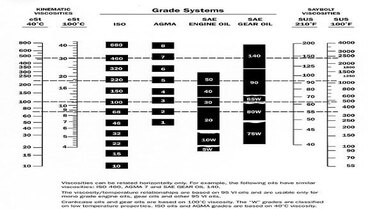
The classification of lubricating oil viscosity grade usually adopts the standard of ISO, which is divided according to the kinematic viscosity of lubricating oil at 40℃, and the unit is mm²/second. Each viscosity grade includes all viscosities within ±10% of the grade. For example, ISO VG 46, the viscosity between 41.4 and 50.6 belongs to 46#.
The classification of automotive oil is basically based on the classification standard of SAE, which is divided into 11 grades: 0W, 5W, 10W, 15W, 20W, 25W, 20, 30, 40, 50, and 60. In summer, engine oil with a viscosity of 40 is generally used, and engine oil with a viscosity of 50 is used in a few tropical areas. In winter, engine oil with a viscosity of 30 is generally used in the south, while 10W and 15W oils are required in the north, and 5W oils are required in very few extremely cold areas. In addition, there are multi-grade oils (XW/XX) that are suitable for both winter and summer, and for both north and south, and have energy-saving effects. "W" stands for winter, and the numbers before W (0, 5, 10, 15, 20) and after W (30, 40, 50) represent the kinematic viscosity classification of the oil at 100°C. 0W, 5W, 10W, 15W, 20W, 25W, and the pumping limit temperature is -35°C, -30°C, -25°C, -20°C, -15°C, -5°C. (The larger the number, the higher the applicable temperature. The brand with the suffix W is suitable for winter; the brand without the suffix W is suitable for normal temperature and summer; if the two numbers are connected, it means it is a multi-grade oil, and its performance meets the requirements of two viscosity grades).
The classification of automotive oil is basically based on the classification standard of SAE, which is divided into 11 grades: 0W, 5W, 10W, 15W, 20W, 25W, 20, 30, 40, 50, and 60. In summer, engine oil with a viscosity of 40 is generally used, and engine oil with a viscosity of 50 is used in a few tropical areas. In winter, engine oil with a viscosity of 30 is generally used in the south, while 10W and 15W oils are required in the north, and 5W oils are required in very few extremely cold areas. In addition, there are multi-grade oils (XW/XX) that are suitable for both winter and summer, and for both north and south, and have energy-saving effects. "W" stands for winter, and the numbers before W (0, 5, 10, 15, 20) and after W (30, 40, 50) represent the kinematic viscosity classification of the oil at 100°C. 0W, 5W, 10W, 15W, 20W, 25W, and the pumping limit temperature is -35°C, -30°C, -25°C, -20°C, -15°C, -5°C. (The larger the number, the higher the applicable temperature. The brand with the suffix W is suitable for winter; the brand without the suffix W is suitable for normal temperature and summer; if the two numbers are connected, it means it is a multi-grade oil, and its performance meets the requirements of two viscosity grades).
الذي هو أفضل أداء الشحوم
To ensure smooth-running hydraulic systems, use the right hydraulic oil and keep it clean and dry.


