
What are the lubrication methods for new energy vehicle bearings?
author: Leila
2025-01-03
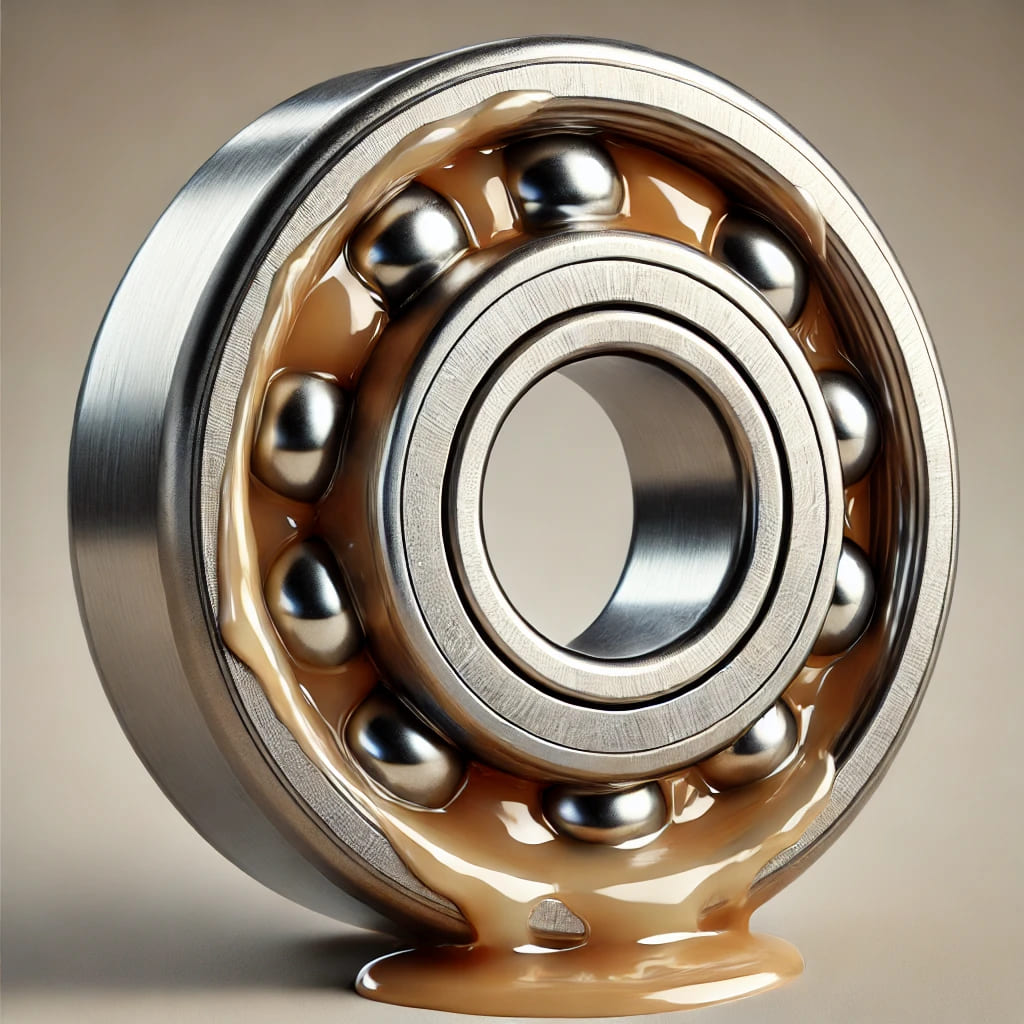
As the core component of electric vehicles, drive motors require high reliability, high power density, wide high efficiency range, wide speed regulation range, and strong overload capacity. As precision parts, bearings are the key to drive motors. High reliability motors require high-performance bearings to ensure this.
Brief description of the main design concepts of bearings
In traditional design, a mathematical model is established to determine the objective function and constraints of bearing design. The design is carried out using the traditional coefficient value method and traditional component structure, that is, the internal design structure details of the bearing are obtained. However, due to its special performance, drive motor bearings need to break through traditional ideas in design concepts. They are different from ordinary bearings in terms of bearing structure design, coefficient values, material selection, heat treatment requirements, and component structure.
Selection of grease
Grease is one of the key factors affecting bearing life. Grease consists of base oil, thickener, and additives. The selection of grease should be based on the operating conditions of the bearing.
(1) Base oil. The high speed of the bearing requires a high Dn value grease. The Dn value should generally be above 700,000. A lower base oil viscosity can reduce friction heat and bearing temperature rise,
and can reduce the low-temperature starting torque of the bearing, thereby reducing energy consumption. However, too low a base oil viscosity will reduce the grease's high temperature resistance, load-bearing capacity and anti-stripping ability. Therefore, finding a suitable base oil viscosity value through repeated experiments is one aspect of selecting a suitable grease to deal with the high and low temperature resistance of the drive motor. The low temperature limit of the drive motor bearing is generally between -40℃ and -50℃, but the high temperature ambient temperature is not too high, generally around 90℃. Based on this, the maximum temperature of the bearing can be inferred. Therefore, a grease with good viscosity-temperature performance and good low temperature performance should be selected.
(2) Thickener. The good shear resistance and good oil separation ability of the grease are conducive to the performance of high-speed grease, which depends on the performance and structure of the thickener. The high-speed operation of the bearing will cause severe shearing and destruction of the thickener fiber structure, and the grease will become thinner due to shearing. Therefore, a harder grease with a high oil separation rate should be selected.
(3) Additives. The characteristics of rapid acceleration and deceleration of bearings cause more impact and agitation of grease, which has a negative impact on the life of grease. Therefore, grease is required to have highly active additives, and extreme pressure additives can be selected. Although the radial load on the bearing is not large, it can optimize the load-bearing capacity of the moving surface, which can provide a longer service life for the grease to a certain extent.
Some people have proposed that electrical corrosion is also a form of bearing failure, but this kind of failure in drive motor bearings is still rare. However, the response to this failure is to select conductive materials from grease additives, but there is a risk of increased noise after actual addition. The choice of grease is ultimately verified by experiments.
Sealing materials
At present, both sealing rubber rings and dust covers are used, with dust covers being the majority. Non-contact seals do not require high grease leakage, and are applicable to working conditions with a clean surrounding environment. On the other hand, the choice of rubber ring material has also become a key point, considering the wear resistance of the rubber ring material and the compatibility of the grease. Of course, on the premise of meeting the performance, the cost must also be considered.
Cage material
At present, the speed of passenger car drive motors in China is generally 11000-14000rpm, while it has reached 16000-20000rpm abroad. At present, there are both steel and nylon cages on the market. Steel wave-shaped cages have high strength and good adaptability to high and low temperatures. But it is undeniable that it has a high friction coefficient with steel balls, which is not conducive to the operation of bearings at higher speeds. The nylon cage is more suitable for high-speed operation due to its superior self-lubricating performance and very low friction coefficient with steel balls. Ordinary PA66 or PA46 has corresponding temperature resistance limits, but the current ambient temperature of drive motor bearings is still within its application range. Otherwise, other higher temperature-resistant materials should be considered. Therefore, the selection of cage materials should be based on specific operating conditions.
Nine common lubrication methods for bearings
Manual lubricating oil
When it is found that the lubricating oil of the bearing is insufficient, it is the most primitive method to use a refueling device to supply oil in time. This method is difficult to maintain a constant amount of oil, and the risk of forgetting to add oil due to negligence is greater. It is usually only used in light-load, low-speed or intermittent motion occasions. It is best to set a dust cover or ball valve on the oil filling hole, and use felt, cotton, wool, etc. as a filter device.
Drop point lubrication
A roughly fixed amount of lubricating oil is supplied from a container through a hole, needle, valve, etc. The most classic is the drip oil cup. The amount of oil dripping varies significantly with the viscosity of the lubricating oil, the bearing clearance and the position of the oil supply hole. It is used for light-loaded and medium-loaded bearings with a circumferential speed of less than 4-5m/s.
Oil ring lubrication
A lubrication method that can only be used for horizontal shafts. The ring that hangs on the shaft and can rotate brings the lubricating oil from the oil pool to the bearing. It is suitable for medium-speed and high-speed bearings with a shaft diameter greater than 50mm. The oil ring is preferably seamless. When the bearing width-to-diameter ratio is less than 2, only one oil ring can be used, otherwise two oil rings are required.
Oil wick lubrication
The lubricating oil in the oil cup is led to the bearing by the capillary action and siphon action of the oil wick. It is used for light-loaded and medium-loaded bearings with a circumferential speed of less than 4-5m/s. The oil wick also has a filtering effect.
Oil pad lubrication
The lubricating oil in the oil pool is applied to the shaft diameter surface by the capillary action of the oil pad. This method can keep the friction surface clean at all times, but dust can also clog the capillaries and cause insufficient oil supply. The oil supply of oil pad lubrication is usually only 1/20 of that of oil lubrication.
Oil bath lubrication
A lubrication method in which part of the bearing is immersed in lubricating oil. Suitable for lubrication of low and medium speed bearings, part of the bearing is immersed in the oil tank, the lubricating oil is carried by the rotating bearing parts, and then flows back to the oil tank. The oil level should be slightly lower than the center of the lowest rolling element.
Splash lubrication
The lubricating oil splashed by the slapping of the rotating parts in the oil tank is supplied to the bearing. It is suitable for bearings with higher speeds.
Spray lubrication
A lubrication method in which the lubricating oil is sprayed on the friction surface in an atomized form. It is suitable for high-speed bearings.
Pressure oil lubrication
The pressure of the lubrication pump is used to supply oil to the bearing, and the lubricating oil flowing out of the bearing is recovered into the oil pool for recycling. It is the lubrication method with the largest oil supply and the most stable, and is suitable for high-speed, heavy-loaded, and important sliding bearings.
Are there no lubricants in the wheel bearings of cars?
How to identify fake and inferior lubricants?


