
Refer to these three standards when choosing fuel-efficient motor oil
author: Ann
2025-02-14
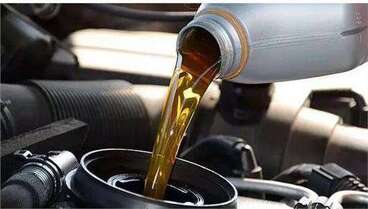
The role of engine oil in the engine can be roughly summarized as: lubrication, cleaning, cooling, and sealing. However, in order to give the engine higher performance, such as control, power, and quietness, the requirements for whether the engine oil can achieve fuel-saving performance are increasing day by day. Therefore, authoritative organizations and vehicle manufacturers have issued relevant engine oil fuel-saving standards to help consumers choose.
ILSACGF-5
GF-5 was promulgated in December 2009 by the International Lubricant Standardization and Certification Committee (ILSAC), which was jointly established by American automobile manufacturers General Motors, Ford, Chrysler and the Japan Automobile Manufacturers Association (JAMA).
Before GF-5, ILSAC had already formulated GF-1, GF-2, GF-3, and GF-4 specifications for gasoline engine oil, requiring that on the basis of reaching the corresponding API quality grade, more stringent requirements were put forward for the energy-saving and environmental protection performance of the product, and the viscosity of the engine oil was limited to SAEXW20 and XW30.
The GF-5 specification requires further improvement of the fuel economy of passenger car engine oil throughout its service life, improvement of the oil's ability to protect the emission system and the compatibility of sealing rubber, and provision of adequate lubrication protection for engines using ethanol fuel and engines using turbocharging technology.
GM Dexos™1
GM Dexos specifications consist of Dexos™1 and Dexos™2, of which Dexos?1 has been used in GM's new gasoline engine passenger cars worldwide after 2011 as initial installation oil and service oil. Dexos?2 is designed for European passenger cars (including gasoline engines and diesel engines) and is used as initial installation oil and service oil for GM vehicles sold in Europe after 2010. What we can see in China is the engine oil with the "Dexos?1" standard.
Dexos™1: Global engine oil specification, used for gasoline engine loading oil and supporting service station oil. Viscosity grades: 0W20, 5W20, 0W30, 5W30 and 10W30. The laboratory indicators of dexos™1 specification are roughly equivalent to those of API's SN and ILSAC's GF-5.
The difference is that dexos™1 requires the sulfur content of the engine oil to be 0.1 lower than that of GF-5. The volatility is lower, with a volatility of ≤13%, which is lower than 15% of GF-5. At the same time, it has higher requirements for matching with rubber and strengthens the protection of engine seals.
A5/B5
A5/B5 is one of the ACEA (European Automobile Manufacturers Association) engine oil certification standards, mainly for high-performance gasoline engines and light diesel engines using low-viscosity engine oils. It is an upgraded version of the A1/B1 standard. A5/B5 engine oil is better than A1/B1 in terms of sediment and fuel economy, and the HTHS (high temperature high shear viscosity) is between 2.9 and 3.5. A5/B5 not only has excellent cooling and lubrication effects, but also has outstanding environmental performance. It is suitable for most Japanese, American and Korean vehicles.
ILSACGF-5
GF-5 was promulgated in December 2009 by the International Lubricant Standardization and Certification Committee (ILSAC), which was jointly established by American automobile manufacturers General Motors, Ford, Chrysler and the Japan Automobile Manufacturers Association (JAMA).
Before GF-5, ILSAC had already formulated GF-1, GF-2, GF-3, and GF-4 specifications for gasoline engine oil, requiring that on the basis of reaching the corresponding API quality grade, more stringent requirements were put forward for the energy-saving and environmental protection performance of the product, and the viscosity of the engine oil was limited to SAEXW20 and XW30.
The GF-5 specification requires further improvement of the fuel economy of passenger car engine oil throughout its service life, improvement of the oil's ability to protect the emission system and the compatibility of sealing rubber, and provision of adequate lubrication protection for engines using ethanol fuel and engines using turbocharging technology.
GM Dexos™1
GM Dexos specifications consist of Dexos™1 and Dexos™2, of which Dexos?1 has been used in GM's new gasoline engine passenger cars worldwide after 2011 as initial installation oil and service oil. Dexos?2 is designed for European passenger cars (including gasoline engines and diesel engines) and is used as initial installation oil and service oil for GM vehicles sold in Europe after 2010. What we can see in China is the engine oil with the "Dexos?1" standard.
Dexos™1: Global engine oil specification, used for gasoline engine loading oil and supporting service station oil. Viscosity grades: 0W20, 5W20, 0W30, 5W30 and 10W30. The laboratory indicators of dexos™1 specification are roughly equivalent to those of API's SN and ILSAC's GF-5.
The difference is that dexos™1 requires the sulfur content of the engine oil to be 0.1 lower than that of GF-5. The volatility is lower, with a volatility of ≤13%, which is lower than 15% of GF-5. At the same time, it has higher requirements for matching with rubber and strengthens the protection of engine seals.
A5/B5
A5/B5 is one of the ACEA (European Automobile Manufacturers Association) engine oil certification standards, mainly for high-performance gasoline engines and light diesel engines using low-viscosity engine oils. It is an upgraded version of the A1/B1 standard. A5/B5 engine oil is better than A1/B1 in terms of sediment and fuel economy, and the HTHS (high temperature high shear viscosity) is between 2.9 and 3.5. A5/B5 not only has excellent cooling and lubrication effects, but also has outstanding environmental performance. It is suitable for most Japanese, American and Korean vehicles.
Is air harmful to lubricants?
لزوجة الشحوم


