
Explaining the "Oil-Free Driving" Scam in the Automotive Lubricant Industry
author: Ann
2025-03-17
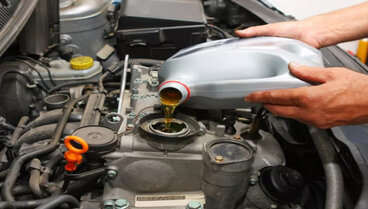
The oil-free driving test seems to show the wear resistance and polar adsorption capacity of the relevant oil products. That is, after the vehicle uses the relevant products for a period of time, the products will soak the engine. After that, even if the engine oil inside the engine is drained, the vehicle can still drive normally.
But is this true? How did the merchants come up with such a magical selling point?
This method of increasing the anti-wear agent component in the product was originally used by racers to prevent the occurrence of blockage caused by oil leakage. This temporary solution for special occasions is very damaging to the car even when used in racing! However, this method was seen by unscrupulous merchants and smelled business opportunities. In order to make profits, profiteers will naturally not miss this great opportunity to hype, but this opportunity is undoubtedly a disaster for car owners.
Why can the oil-free driving test, which is obviously a scam, still run rampant in the lubricant industry for 10 years? In fact, the oil-free driving test is not so much a technical test as a grand false road show marketing.
People always think that what they see is the most trustworthy. It is precisely because of this mentality that the oil-free driving experiment can resonate with consumers by speaking with facts. Compared with the comparative data on the Internet that "attack" the oil-free experiment, consumers are more willing to believe the oil-free driving process they see with their own eyes. And all the scientific analysis of professionals ultimately lost to the four words "seeing is believing".
But is seeing really believing? First of all, why can't the merchants produce a convincing product performance analysis and evaluation report from the relevant authoritative departments for such a great product! Is such a magical product disdainful of being certified by the authority or simply not recognized?
Secondly, what preparations did the unscrupulous merchants make before doing the "oil-free driving experiment"? If the unscrupulous merchants use the car they prepared for the experiment, they will remove the oil pan before the experiment, weld a metal pipe just above the drain screw, and then shorten the oil dipstick. When consumers drain the oil, the oil pan drain screw is actually welded to the oil pan iron pipe. There is still a lot of oil at the bottom. After draining the oil, the oil dipstick has naturally shrunk, so there is no oil. It is okay to run a few kilometers in a row with oil in it!
Later, I saw that some rational people were a little skeptical, and the profiteers took the cars of car owners who were willing to be guinea pigs to do experiments. But they all chose some old vehicles. An obvious disadvantage of old cars is that there are large gaps between the various parts of its engine. The engine with large gaps will store a lot more oil between the various parts. In this way, even if the oil is drained, the oil retained between the parts can still keep the engine working for a period of time.
But not seeing the problem does not mean that the problem does not exist. Driving without oil will definitely cause great damage to the engine, such as fatigue attenuation of the engine, premature aging caused by wear of parts, shortened life, etc.
In fact, no matter what car it is, the oil cannot be drained cleanly from the oil pan. The residual oil is enough to keep the vehicle running at a low and uniform speed for a distance. But this will cause greater wear.
But is this true? How did the merchants come up with such a magical selling point?
This method of increasing the anti-wear agent component in the product was originally used by racers to prevent the occurrence of blockage caused by oil leakage. This temporary solution for special occasions is very damaging to the car even when used in racing! However, this method was seen by unscrupulous merchants and smelled business opportunities. In order to make profits, profiteers will naturally not miss this great opportunity to hype, but this opportunity is undoubtedly a disaster for car owners.
Why can the oil-free driving test, which is obviously a scam, still run rampant in the lubricant industry for 10 years? In fact, the oil-free driving test is not so much a technical test as a grand false road show marketing.
People always think that what they see is the most trustworthy. It is precisely because of this mentality that the oil-free driving experiment can resonate with consumers by speaking with facts. Compared with the comparative data on the Internet that "attack" the oil-free experiment, consumers are more willing to believe the oil-free driving process they see with their own eyes. And all the scientific analysis of professionals ultimately lost to the four words "seeing is believing".
But is seeing really believing? First of all, why can't the merchants produce a convincing product performance analysis and evaluation report from the relevant authoritative departments for such a great product! Is such a magical product disdainful of being certified by the authority or simply not recognized?
Secondly, what preparations did the unscrupulous merchants make before doing the "oil-free driving experiment"? If the unscrupulous merchants use the car they prepared for the experiment, they will remove the oil pan before the experiment, weld a metal pipe just above the drain screw, and then shorten the oil dipstick. When consumers drain the oil, the oil pan drain screw is actually welded to the oil pan iron pipe. There is still a lot of oil at the bottom. After draining the oil, the oil dipstick has naturally shrunk, so there is no oil. It is okay to run a few kilometers in a row with oil in it!
Later, I saw that some rational people were a little skeptical, and the profiteers took the cars of car owners who were willing to be guinea pigs to do experiments. But they all chose some old vehicles. An obvious disadvantage of old cars is that there are large gaps between the various parts of its engine. The engine with large gaps will store a lot more oil between the various parts. In this way, even if the oil is drained, the oil retained between the parts can still keep the engine working for a period of time.
But not seeing the problem does not mean that the problem does not exist. Driving without oil will definitely cause great damage to the engine, such as fatigue attenuation of the engine, premature aging caused by wear of parts, shortened life, etc.
In fact, no matter what car it is, the oil cannot be drained cleanly from the oil pan. The residual oil is enough to keep the vehicle running at a low and uniform speed for a distance. But this will cause greater wear.
36 fossil fuel giants account for more than half of global emissions, and energy transformation has been collectively "put on the brakes"
معرفة الشحوم الحفر


