
The international energy market is facing oversupply and oil prices are expected to fall
author: Ann
2025-03-19
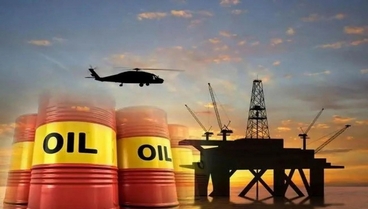
Recently, the International Energy Agency (IEA) released a report pointing out that the current crude oil supply exceeds the demand by about 600,000 barrels per day. This phenomenon has attracted widespread attention in the global oil market. Many oil industry analysts and traders have expressed concerns that oil prices may continue to fall and are expected to stabilize between $60 and $80 per barrel.
According to Russell Hardy, CEO of Vitol, although the current supply and demand situation is bearish, demand sometimes shows stronger than expected. Hardy pointed out that the price of West Texas Intermediate crude oil may fall below $60 in the short term, but it will not last too long. Regarding the current market situation, he said that over-drilling may be a potential cause of the decline in oil prices. This situation has occurred many times in the past and has formed a natural law of market adjustment.
As the United States becomes the world's largest oil producer, production continues to rise. The U.S. Energy Information Administration's Short-Term Energy Outlook report shows that the United States is expected to increase its daily production by 400,000 barrels this year, eventually reaching 13.6 million barrels per day. This growth not only consolidates the United States' position as an oil producer, but also becomes one of the main factors for weak oil prices.
At the same time, the Organization of the Petroleum Exporting Countries (OPEC and its allies OPEC+) is also increasing production. Some member countries have significantly exceeded their set quotas. For example, Kazakhstan produced 1.767 million barrels per day in February, while its quota was only 1.468 million barrels, and Nigeria's overproduction was relatively small, about 70,000 barrels per day. These have further exacerbated the oversupply in the market.
Torbjörn Törnqvist, chairman of Gunvor, told Bloomberg during Cambridge Energy Week (CERAWeek) that the current oil industry is facing overdrilling, both inside and outside OPEC, which exceeds the level allowed by demand growth.
From a demand perspective, the market is uneasy about President Donald Trump's tariff policy, especially tariffs on steel and aluminum products, which may increase commodity prices and thus suppress crude oil demand. Although the analysis points out that this impact may be mild, it still creates some uncertainty about the industry's prospects.
In the refining industry, the situation is more complicated. It is reported that the United States plans to close up to 400,000 barrels of refining capacity per day in the future, and two refineries in Los Angeles and Houston will be closed in 2025, which will make more crude oil available in the market. This situation may exacerbate the contradiction between supply and demand, but people still need to be cautious about their expectations of oil prices.
In the context of the global energy dialogue, well-known analyst Jeff Currie reminded people that the world has entered the peak era of oil trade. He pointed out that international oil trade reached its peak in 2017, and then the market gradually showed a downward trend due to the development of new energy. He emphasized that although oil is still a stable energy source, its market is affected by multiple factors, especially the tariff policy imposed by the Trump administration.
In sharp contrast, JPMorgan Chase's latest report refuted this, pointing out that in the past decade, global investment in renewable energy has not significantly increased its market share in terminal energy consumption. From this point of view, the oil market is facing downward pressure due to the imbalance between supply and demand, but it does not seem to be completely suppressed.
In summary, although the current global oil supply exceeds demand and multiple factors have put pressure on oil prices, the future market trend is still full of variables. The international market still needs to pay attention to the potential recovery of demand and the adjustment of production activities. The real trend may be very different from the current forecast. In this case, flexibility and prudence may be the best strategy for participants to cope with changes.
According to Russell Hardy, CEO of Vitol, although the current supply and demand situation is bearish, demand sometimes shows stronger than expected. Hardy pointed out that the price of West Texas Intermediate crude oil may fall below $60 in the short term, but it will not last too long. Regarding the current market situation, he said that over-drilling may be a potential cause of the decline in oil prices. This situation has occurred many times in the past and has formed a natural law of market adjustment.
As the United States becomes the world's largest oil producer, production continues to rise. The U.S. Energy Information Administration's Short-Term Energy Outlook report shows that the United States is expected to increase its daily production by 400,000 barrels this year, eventually reaching 13.6 million barrels per day. This growth not only consolidates the United States' position as an oil producer, but also becomes one of the main factors for weak oil prices.
At the same time, the Organization of the Petroleum Exporting Countries (OPEC and its allies OPEC+) is also increasing production. Some member countries have significantly exceeded their set quotas. For example, Kazakhstan produced 1.767 million barrels per day in February, while its quota was only 1.468 million barrels, and Nigeria's overproduction was relatively small, about 70,000 barrels per day. These have further exacerbated the oversupply in the market.
Torbjörn Törnqvist, chairman of Gunvor, told Bloomberg during Cambridge Energy Week (CERAWeek) that the current oil industry is facing overdrilling, both inside and outside OPEC, which exceeds the level allowed by demand growth.
From a demand perspective, the market is uneasy about President Donald Trump's tariff policy, especially tariffs on steel and aluminum products, which may increase commodity prices and thus suppress crude oil demand. Although the analysis points out that this impact may be mild, it still creates some uncertainty about the industry's prospects.
In the refining industry, the situation is more complicated. It is reported that the United States plans to close up to 400,000 barrels of refining capacity per day in the future, and two refineries in Los Angeles and Houston will be closed in 2025, which will make more crude oil available in the market. This situation may exacerbate the contradiction between supply and demand, but people still need to be cautious about their expectations of oil prices.
In the context of the global energy dialogue, well-known analyst Jeff Currie reminded people that the world has entered the peak era of oil trade. He pointed out that international oil trade reached its peak in 2017, and then the market gradually showed a downward trend due to the development of new energy. He emphasized that although oil is still a stable energy source, its market is affected by multiple factors, especially the tariff policy imposed by the Trump administration.
In sharp contrast, JPMorgan Chase's latest report refuted this, pointing out that in the past decade, global investment in renewable energy has not significantly increased its market share in terminal energy consumption. From this point of view, the oil market is facing downward pressure due to the imbalance between supply and demand, but it does not seem to be completely suppressed.
In summary, although the current global oil supply exceeds demand and multiple factors have put pressure on oil prices, the future market trend is still full of variables. The international market still needs to pay attention to the potential recovery of demand and the adjustment of production activities. The real trend may be very different from the current forecast. In this case, flexibility and prudence may be the best strategy for participants to cope with changes.
أربعة الكرة اختبار الشحوم
تصنيف واختيار الشحوم


