
US sanctions on Iran oil trade
author: Ann
2025-05-15
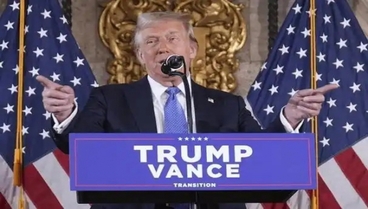

On May 13, 2025, the U.S. Treasury Department issued a press release stating that it would impose sanctions on nearly 24 companies involved in Iran's oil trade, including some front companies that disguised Iran's oil trade, and several Chinese companies were included in the sanctions list. The sanctions are part of the Trump administration's "maximum pressure" campaign against Iran, at a time when the United States and Iran are negotiating on nuclear projects.
The U.S. Treasury Department said that since Trump took office, 19 sanctions involving Iran have been launched, with a total of 253 individuals, entities and ships sanctioned. The sanctions are based on Executive Order No. 13224 (amending Executive Order No. 13886) and are intended to implement the instructions of Presidential Memorandum No. 2 on National Security to exert maximum economic pressure on the Iranian regime.
The U.S. Treasury Department's Office of Foreign Assets Control (OFAC) pointed out that Iran's Sepehr Energy Company has long been transporting and trading oil through its or its affiliated front companies, creating the illusion of normal trade, but in fact it is an oil smuggling and money laundering system. Xin Rui Ji, Star Energy and other Hong Kong companies controlled by the company receive Iranian oil and transport it to China's "teapot" refinery, and the trade proceeds eventually flow back to the General Staff of the Iranian Armed Forces. In addition, Qingdao Linkrich and other companies provide port agency services for it, Metaone Trading Limited and other companies act as oil trade intermediaries, and Qingdao Fushen directly purchases more than $138 million of oil from related companies.
At the same time, the "shadow fleet" that assisted in the transportation of Iranian oil was also sanctioned, including tankers flying the flags of Cameroon and Panama, and Nanhai Limited, a maritime commercial operator in Hong Kong, China. According to relevant executive orders, transactions with sanctioned entities will face the risk of secondary sanctions. If foreign financial institutions knowingly violate the rules, they may be prohibited from opening or maintaining correspondent bank accounts in the United States; companies listed on the SDN list involving trade in U.S. export-controlled items will also be subject to additional restrictions by the Bureau of Industry and Security of the U.S. Department of Commerce.
The U.S. Treasury Department said that since Trump took office, 19 sanctions involving Iran have been launched, with a total of 253 individuals, entities and ships sanctioned. The sanctions are based on Executive Order No. 13224 (amending Executive Order No. 13886) and are intended to implement the instructions of Presidential Memorandum No. 2 on National Security to exert maximum economic pressure on the Iranian regime.
The U.S. Treasury Department's Office of Foreign Assets Control (OFAC) pointed out that Iran's Sepehr Energy Company has long been transporting and trading oil through its or its affiliated front companies, creating the illusion of normal trade, but in fact it is an oil smuggling and money laundering system. Xin Rui Ji, Star Energy and other Hong Kong companies controlled by the company receive Iranian oil and transport it to China's "teapot" refinery, and the trade proceeds eventually flow back to the General Staff of the Iranian Armed Forces. In addition, Qingdao Linkrich and other companies provide port agency services for it, Metaone Trading Limited and other companies act as oil trade intermediaries, and Qingdao Fushen directly purchases more than $138 million of oil from related companies.
At the same time, the "shadow fleet" that assisted in the transportation of Iranian oil was also sanctioned, including tankers flying the flags of Cameroon and Panama, and Nanhai Limited, a maritime commercial operator in Hong Kong, China. According to relevant executive orders, transactions with sanctioned entities will face the risk of secondary sanctions. If foreign financial institutions knowingly violate the rules, they may be prohibited from opening or maintaining correspondent bank accounts in the United States; companies listed on the SDN list involving trade in U.S. export-controlled items will also be subject to additional restrictions by the Bureau of Industry and Security of the U.S. Department of Commerce.
Commercial vehicle wheel hub bearing lubrication selection and application
Basic knowledge of industrial cleaning agents


